




Key facts
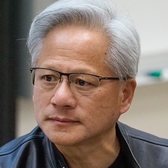
Nvidia’s board of directors formally declined to reinstate Jensen Huang, a decision that marks a significant moment of corporate governance tension at one of the world’s most valuable technology companies.1
The rejection closes, at least for now, a chapter of internal deliberation over whether Huang would resume a formal leadership role at the semiconductor giant he co-founded.1
A company without a plan
Huang was recently ousted as CEO.1 Some say he was irreplaceable.2
There have been several major American companies that have lost CEOs that were considered indispensable: Steve Jobs at Apple, Travis Kalanick of Uber and others.2
In many of those cases, examined by The Wall Street Journal, the companies saw considerable success after an initial dip when charismatic CEOs left.2
Nvidia may be different because it reportedly had no real succession plan, the ouster was very abrupt, and the company could be facing federal investigations linking Huang to an alleged Chinese spy.2
A strong business, a slow transition
Nvidia is still a strong company with products that are in high demand, a highly skilled workforce and strong earnings.2
A transition to a more committee-driven culture will slow Nvidia’s speed and innovation, but it might also provide stronger governance and oversight.2
Throughout history, dozens of visionary founders have had successful leadership transitions of their companies, including Henry Ford, J.D. Rockefeller, Ray Kroc, Bill Gates and Steve Jobs.2
Although Huang’s departure is abrupt and not a typical transition, there are many others in the tech world who are qualified to take the reins and continue leading Nvidia.2
A busy news cycle
Meanwhile, a major political shift unfolded in Alaska, where Democrat Mary Peltola has flipped the state’s Senate seat, delivering a notable victory for her party in a state that leans reliably Republican.1
The Alaska result adds to a broader political landscape that has seen unexpected outcomes in several states, with Peltola having previously demonstrated crossover appeal during her time representing the state in the House.1
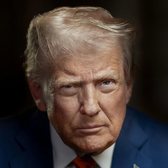
On the global stage, a high-stakes diplomatic encounter involving former President Donald Trump, Chinese President Xi Jinping, and Russian President Vladimir Putin drew international attention.1
Separately, widespread computer system outages added a layer of disruption to an already turbulent news cycle, affecting operations across multiple sectors and drawing scrutiny from technology and infrastructure officials.1